



29 August 2026
Last Updated: August 29, 2026
A corporate away day cost breakdown is the itemised analysis of all expenses involved in planning and executing an off-site team event, from venue hire and accommodation through to activities, catering, and transport. Understanding this breakdown is essential because away days represent a significant investment, and costs can spiral quickly without proper planning and oversight.
The challenge most organisations face is that they underestimate hidden expenses. A team might budget for venue hire and catering, only to discover that transport logistics, activity facilitation, insurance, and contingency costs add thousands more. This guide from Team Building Solutions walks you through every cost category, shows you how to build a realistic budget, and explains where most organisations overspend, so you can make confident decisions about your corporate away day cost breakdown before you commit.
The major expense categories for a corporate away day typically fall into five areas: venue, activities, catering, transport, and staffing or facilitation. Each category has variables that shift based on your group size, location, duration, and the type of experience you want to create.

Venue costs depend entirely on your location, group size, and the type of space you need. A half-day workshop in a city conference centre will cost far less than a two-day residential retreat at a country hotel. Venues typically charge per room, per person, or as a flat daily rate.
For day events in urban areas, expect to pay for room hire alone, usually between a fixed fee or a per-head rate. Rural venues and country estates often bundle accommodation with meal packages, which can simplify budgeting but locks you into their catering rates. Residential venues sometimes waive room hire if you meet minimum spend on food and beverage.
Location matters significantly. Central London venues command premium rates; regional cities offer better value. Seasonal timing also affects price, peak summer months and school holidays cost more than shoulder seasons. Many venues offer better rates for off-peak dates (November through February, excluding Christmas).
When evaluating venue costs, ask about what's included. Some venues include tables, chairs, and basic AV equipment; others charge separately for these essentials. Parking, WiFi, and breakout room access should be clarified upfront. Team Building Solutions offers a free venue finding service, which means you can access competitive quotes from multiple venues without spending weeks on research yourself.
Activity costs vary enormously based on what you choose. A self-facilitated discussion session costs nothing; a professionally led team building programme with trained facilitators runs considerably more.
Off-the-shelf activities, trust falls, scavenger hunts, or icebreaker games, are inexpensive or free. Bespoke activities designed specifically for your team's needs, challenges, or objectives cost more but deliver better outcomes because they're tailored to your actual situation. Outdoor activities like adventure courses, team challenges, or sports tournaments typically cost more than indoor workshops because they require equipment, insurance, and specialist staff.
Facilitation is where many organisations underestimate costs. A professional facilitator who designs and runs activities, manages group dynamics, and ensures everyone participates costs more upfront but prevents the awkward, forced feeling that cheap or amateur-led activities often produce. Award-winning facilitators with experience in corporate settings command premium fees, but they deliver measurable results, better engagement, clearer outcomes, and fewer complaints about the day feeling "cheesy."
If your team includes introverts, people with mobility issues, or those sceptical about traditional team building, professional facilitation becomes even more valuable. A skilled facilitator designs activities that include everyone without making accommodations feel obvious or uncomfortable.
Catering costs depend on meal type, dietary requirements, and venue location. A simple continental breakfast and packed lunch costs significantly less than a full hot lunch with afternoon tea. Alcohol, premium beverages, and dietary variety add cost.
Budget per person varies widely. Basic catering (tea, coffee, biscuits, sandwich lunch) might be in a certain range per head. Mid-range catering (hot breakfast, hot lunch, afternoon refreshments) ranges higher. Premium catering with multiple dietary options, premium beverages, and special dietary accommodations costs more still.
Hidden catering costs include bar charges (if alcohol is served), late-night snacks, dietary requirement surcharges, and service charges. Always ask whether tips and service charges are included in quoted prices. Some venues charge significantly more for vegetarian, vegan, or allergen-free meals, budget for this if your team has diverse dietary needs.
Alcohol pushes costs up noticeably. A wine reception or open bar adds to the cost per person. If you're unsure whether to offer alcohol, consider your team's preferences and your organisation's culture. Some teams bond better with alcohol; others prefer it not be present.
Transport costs depend on distance, group size, and whether you're arranging coaches, minibuses, or public transport reimbursement. A local half-day event might need no transport budget; a multi-site or rural venue requires careful planning.
Coach hire for a full day typically costs per vehicle, not per person, so larger groups spread the cost more efficiently. Parking at the venue is sometimes charged separately. If attendees are using personal vehicles, you may need to reimburse mileage or parking.
For events outside easy public transport reach, coach hire is often the most cost-effective option. For city-centre events, public transport reimbursement or a shuttle service might suffice. Remote workers or distributed teams may require travel to a central point, which adds complexity and cost.
Logistics also includes setup and breakdown time. If you're hiring external facilitators or activity providers, their travel time and setup requirements may add cost. Confirm whether facilitators' travel is included in their quoted fee or charged separately.
Cost per head varies dramatically based on event type and duration. A half-day workshop in a city centre might cost a certain amount per person (venue only). A full-day event with activities and catering typically ranges from a certain amount per person. A two-day residential away day with accommodation, meals, and professional facilitation often costs more per person, depending on venue quality and activity choices.
These figures are broad ranges because so many variables affect the final cost. A 50-person event in a premium rural venue with professional facilitation and full board will cost far more per head than a 200-person event in a city conference centre. Economies of scale work in your favour at larger sizes, per-head costs typically decrease as group size increases.
The cost per head also reflects what you're trying to achieve. If the away day is primarily social (a day out), costs can be lower. If it's designed to address genuine team challenges, improve communication, or integrate merged departments, professional facilitation and carefully chosen activities justify higher spend.
Start by listing every cost category and assigning rough figures based on your group size, location, and duration. A simple spreadsheet works well for this. Include columns for estimated cost, actual cost, and notes about what's included.
Core budget categories:
Once you've estimated each line, add a 10-15% contingency buffer. Events almost always cost more than the initial budget, unexpected charges arise, group sizes change, or you decide to upgrade something mid-planning.
Share your draft budget with stakeholders early. This prevents surprises later and gives leadership visibility into where money is being spent. If your initial budget exceeds what's available, you can make trade-off decisions (fewer activities but better catering, or a closer venue to reduce transport costs) before you've committed to anything.
Start by defining your objectives and maximum budget. These two things determine everything else. If your goal is to integrate two merged teams and your budget is modest, you'll prioritise professional facilitation over venue luxury. If your goal is to reward high performers and your budget is generous, you might invest more in location and experience.
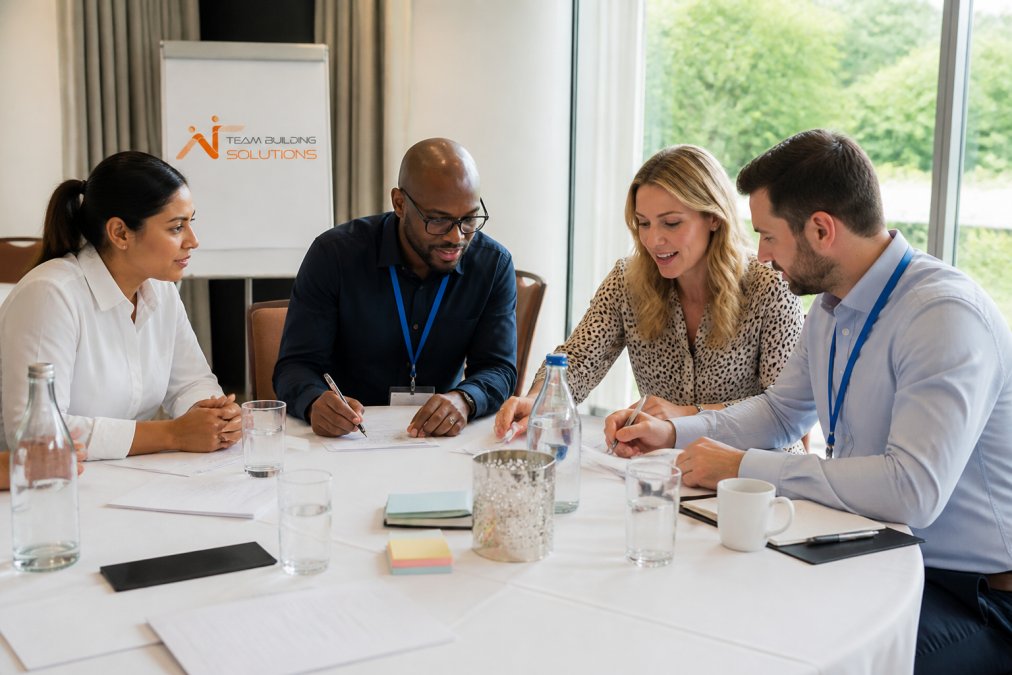
Once objectives and budget are clear, sketch out the day's structure. How long is the event? Is it residential or day-only? How much time for activities versus socialising? This structure determines what's feasible and helps you allocate budget accordingly.
Get venue quotes early and compare what's included. A venue that includes basic AV, tables, and chairs saves you money compared to one where you hire everything separately. Ask specifically about what's bundled and what costs extra.
For activities, decide whether you want off-the-shelf options (cheaper, generic) or bespoke design (more expensive, but tailored to your needs). If budget is tight, a well-facilitated discussion or workshop costs less than an outdoor activity provider but can be equally valuable if designed well.
Catering is where you can find savings without sacrificing quality. Mid-range catering is often better value than budget options, you avoid the "cheap sandwich" feeling that damages morale. Ask venues for package deals that bundle accommodation, meals, and room hire; these often represent better value than booking separately.
Build in time for proper planning. Rushing a corporate away day cost breakdown and booking decisions leads to overspending. Starting planning three to four months ahead gives you time to negotiate, compare quotes, and make thoughtful decisions rather than panic-buying at the last minute.
Several costs surprise organisations mid-planning. Service charges and gratuities are often added to catering invoices without being explicitly mentioned upfront, always ask whether quoted catering prices include these. Some venues add a percentage on top of food costs for service; others don't, so clarify before booking.
Setup and breakdown time is sometimes charged separately from the main venue hire. If you're bringing in external facilitators or equipment, confirm whether their setup time is included in their fee or billable as extra hours.
Insurance is a hidden cost many organisations overlook. If you're running outdoor activities, adventure activities, or events with alcohol, you may need specific event insurance. Venues sometimes require proof of insurance; check their requirements before committing.
Last-minute changes cost money. If your group size increases, catering and transport costs rise proportionally. If you decide to add an activity or upgrade the venue, you're paying for changes at short notice, which often costs more. Build in a contingency buffer (10-15% of your total budget) so you can absorb small changes without panic.
Travel time and staff coordination are internal costs that don't appear on invoices but consume resources. Budget internal time for planning, supplier management, day-of coordination, and follow-up. This is particularly important for larger events or those involving distributed teams.
Managing every detail of a corporate away day cost breakdown yourself is time-consuming and error-prone. Professional support, whether that's a dedicated event planner, a venue coordinator, or a specialist corporate events provider, often pays for itself by preventing costly mistakes and negotiating better rates than you'd achieve alone.
Team Building Solutions brings over 30 years of experience to corporate away day planning. Rather than charging you to find venues, we offer a free venue finding service, we identify options that match your budget and objectives, saving you weeks of research and ensuring you see competitive quotes. Our comprehensive account management handles vendor coordination, timeline management, and day-of logistics, so your internal team can focus on other priorities.
Beyond venue finding, we design and facilitate activities that actually work. We've seen enough corporate away days to know what generates genuine engagement versus what feels forced. Our award-winning wellness sessions and team building activities are designed to address real team challenges, whether that's communication, trust, integration after a merger, or simply building stronger working relationships.
For organisations with complex requirements, distributed teams needing virtual components, newly merged departments with tension, or large groups requiring multiple activity streams, professional facilitation transforms a day out into a strategic intervention. The investment in professional support typically costs less than the hidden expenses and coordination time you'd otherwise spend managing it yourself.
Planning a corporate away day requires balancing multiple cost categories and making trade-off decisions with incomplete information. The most common mistake is underestimating the total cost by omitting hidden expenses or underpricing key categories like professional facilitation.
Start with clear objectives and a realistic budget. Get competitive venue quotes early, decide what level of activity facilitation matches your needs and budget, and build in a contingency buffer for the inevitable surprises. If your organisation lacks internal event planning expertise or you're managing a large or complex event, professional support from Team Building Solutions can save you money and stress while delivering better outcomes. Contact our team for a free consultation and bespoke quote tailored to your corporate away day cost breakdown and specific requirements.
=== FAQ ANSWERS (audit these too, same rules) ===
[1] Q: What is a reasonable budget per head for a corporate away day? A: The cost per head varies significantly depending on event duration, location, activity type, and group size. A half-day local event typically costs less than a residential multi-day retreat. Factors including catering quality, venue prestige, and specialist facilitation all affect the final figure. Team Building Solutions creates bespoke programmes tailored to your specific budget and group size, ensuring you get maximum value regardless of your investment level.
[2] Q: What are the hidden costs of organising a company away day? A: Common overlooked expenses include travel insurance, contingency activities if weather disrupts outdoor plans, accessibility requirements for participants with mobility needs, last-minute catering adjustments, and professional facilitation fees. Administrative costs such as booking management and communication with remote participants can also add up. Planning ahead with a detailed corporate away day budget template helps identify these costs early, allowing you to build them into your overall budget rather than discovering them mid-planning.
[3] Q: How do I create an effective corporate away day budget template? A: Start by listing all major cost categories: venue, accommodation, catering, activities, transport, and contingencies. Assign estimated costs to each based on your group size and duration. Include a 10-15% buffer for unexpected expenses. Break costs down by per-head figures to understand your investment clearly. Assign responsibility for tracking each category and set approval thresholds. Team Building Solutions can guide you through this process, helping you allocate resources effectively and ensure nothing falls through the cracks.
[4] Q: Is VAT reclaimable on corporate team building events? A: VAT treatment depends on the nature of your event and your company's circumstances. Team building activities and venue hire are typically subject to VAT, though some services may have different classifications. It's essential to consult your accountant or tax adviser regarding what's recoverable for your specific situation. Keep detailed invoices from all suppliers, as HMRC requires clear documentation of event-related expenses for any VAT claims.
The cost per head varies significantly depending on event duration, location, activity type, and group size. A half-day local event typically costs less than a residential multi-day retreat. Factors including catering quality, venue prestige, and specialist facilitation all affect the final figure. Team Building Solutions creates bespoke programmes tailored to your specific budget and group size, ensuring you get maximum value regardless of your investment level.
Common overlooked expenses include travel insurance, contingency activities if weather disrupts outdoor plans, accessibility requirements for participants with mobility needs, last-minute catering adjustments, and professional facilitation fees. Administrative costs such as booking management and communication with remote participants can also add up. Planning ahead with a detailed corporate away day budget template helps identify these costs early, allowing you to build them into your overall budget rather than discovering them mid-planning.
Start by listing all major cost categories: venue, accommodation, catering, activities, transport, and contingencies. Assign estimated costs to each based on your group size and duration. Include a 10-15% buffer for unexpected expenses. Break costs down by per-head figures to understand your investment clearly. Assign responsibility for tracking each category and set approval thresholds. Team Building Solutions can guide you through this process, helping you allocate resources effectively and ensure nothing falls through the cracks.
VAT treatment depends on the nature of your event and your company's circumstances. Team building activities and venue hire are typically subject to VAT, though some services may have different classifications. It's essential to consult your accountant or tax adviser regarding what's recoverable for your specific situation. Keep detailed invoices from all suppliers, as HMRC requires clear documentation of event-related expenses for any VAT claims.