

06 October 2026
Last Updated: October 6, 2026
An inclusive corporate away day is an off-site event designed so every employee can participate fully, regardless of their physical abilities, neurodivergence, or personal preferences. At Team Building Solutions, we've spent over 30 years designing events where no one feels left behind.
The difference between a standard away day and an inclusive one comes down to planning. Most teams skip accessibility conversations entirely. They book a venue, plan activities, send invites, and hope everyone shows up ready to engage. What happens instead?
An inclusive corporate away day isn't about accommodation as an afterthought. It's about building accessibility into every decision from the start:
When you plan this way, something shifts. Employees feel valued. Participation improves. Teams actually connect instead of going through the motions. That's what makes the investment worthwhile.
You cannot design an inclusive corporate away day without knowing what your team needs. This starts with asking, but asking properly means making it safe, confidential, and easy to respond.
Send a brief, anonymous survey 6-8 weeks before your event. Frame it as essential planning, not optional feedback. Keep questions simple and non-invasive.
Include questions like:
Use a platform that allows anonymous responses. This removes the fear that disclosing needs might affect how colleagues perceive someone. Make it clear that responses are confidential and shared only with the event planning team.
Anonymous surveys catch general patterns. One-to-one conversations catch the details that matter.
After reviewing survey responses, reach out to anyone who flagged accessibility needs. A simple email works: "Thank you for letting us know you need X support. I'd like to discuss how we can make this work. Would you prefer a quick call or email exchange?"
These conversations aren't about prying. They're about problem-solving together. Someone might mention mobility challenges in a survey, but a conversation reveals they can manage stairs if there's a handrail, or they'd prefer a ground-floor venue entirely.
Document what you learn, but keep it separate from personnel files. Share only what's needed with the venue and activity coordinators.
The venue sets the tone for inclusion. A space that's physically accessible, well-signposted, and comfortable for everyone makes the entire event easier to manage.
Walk through your shortlisted venues in person. Don't rely on website descriptions or phone calls. Here's what to check:
Take photos or video during your visit. This helps your team remember details and spot issues later.
Beyond basic access, check what else the venue offers:
Ask the venue about their experience hosting inclusive events. Have they worked with neurodivergent groups? Do they have staff trained in disability awareness? Their answers tell you whether inclusion is genuinely embedded or just a checkbox.
An inclusive corporate away day requires coordination across multiple areas. This checklist keeps nothing from slipping through the cracks.
Communicate early and clearly. Send information at least 4 weeks before the event:
Send this information in multiple formats: email, printed document, and large-print version if possible. Some people need time to plan how they'll attend, arrange support, or manage their energy.
One week before, send a reminder with the same details plus:
Assign someone to manage accessibility on the day. This person's job is to:
Brief all staff and volunteers on the day about accessibility. A 10-minute chat covers the basics: where quiet spaces are, who to contact if someone needs help, and how to include people in activities without making assumptions about what they can or can't do.
Start the day with a brief welcome that acknowledges accessibility. Something simple: "We've designed this day so everyone can participate in ways that work for them. If you need anything, please ask, that's what we're here for."
The activities you choose determine whether people actually engage or just show up.

Not everyone wants to do a high-energy outdoor challenge. Many people can't. Offer activities that work for different energy levels and physical abilities:
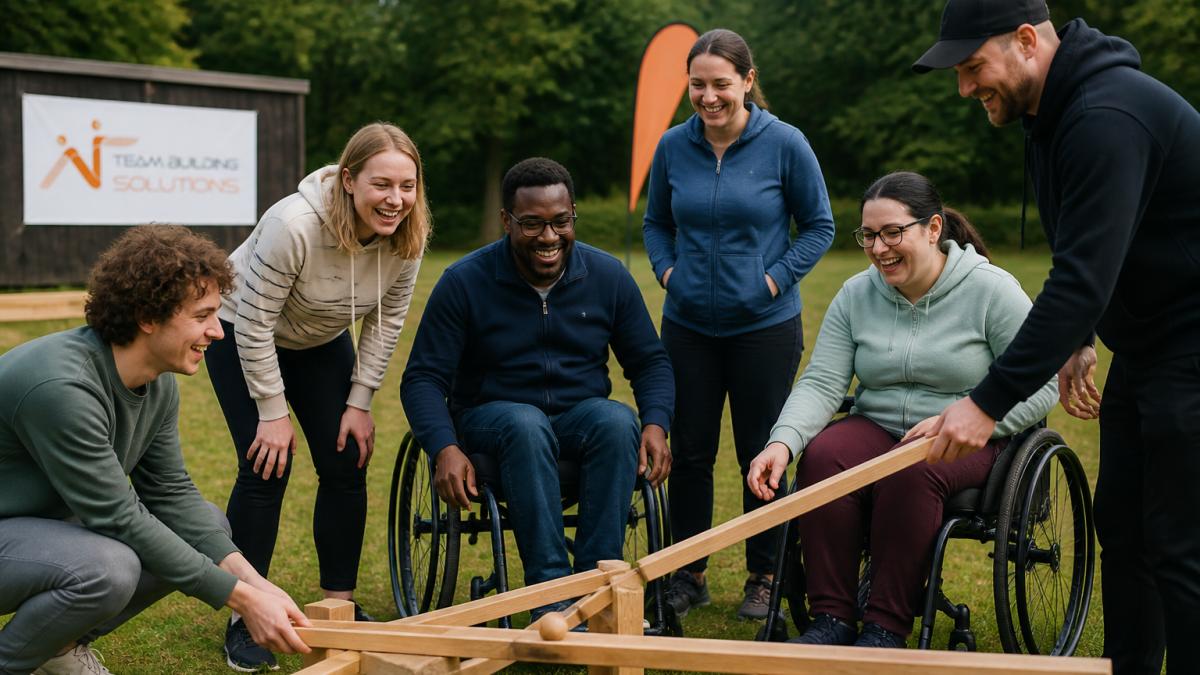
At Team Building Solutions, we design activities that work for mixed-ability groups. The key is offering genuine choice, not token options. If you offer a quiet workshop as an "alternative" while everyone else does an intense outdoor game, the quiet option still feels like the consolation prize.
Instead, run multiple activities simultaneously and let people choose what appeals to them. Some people will pick the high-energy option. Others will choose the seated workshop. Both are equally valued.
Some people can't attend in person. Some can attend only part of the day. Some need the option to step away if they become overwhelmed.
If your away day is in-person, consider a hybrid option:
For activities that can't easily go virtual, offer alternatives. If you're doing a team hike, offer a virtual wellness session at the same time. If you're doing outdoor games, offer an indoor creative activity. People choose based on what works for them.
Sensory overload, social anxiety, and neurodivergent processing differences are real barriers at away days. Addressing them isn't complicated, it just requires awareness.
Create quiet spaces where people can take breaks. A small room with comfortable seating, low lighting, and no background noise works.
Manage sensory input during activities. Loud music, flashing lights, and strong smells can be overwhelming for autistic people, people with ADHD, and others with sensory sensitivities.
Communicate schedules clearly. Neurodivergent people often need to know what's happening and when. Provide a detailed timetable, including break times and transition times between activities.
Offer solo or small-group options. Not everyone thrives in large group activities.
Tell your team that you're planning an inclusive corporate away day. Don't just do it quietly, make it visible.
Send a message from leadership explaining why inclusion matters and what you're doing to make it happen. Be specific: "We're choosing a step-free venue.
This does two things. First, it signals to people with accessibility needs that you've thought about them. Second, it normalises the conversation.
Ask for feedback once the event is over. Send a brief survey asking what worked, what didn't, and what would make the next away day better.
Planning an inclusive corporate away day takes more upfront effort than a standard event. But the payoff is real.
Team Building Solutions has designed inclusive away days for companies of all sizes, from small teams to groups of 500. If you'd like to discuss how we can help plan your next inclusive corporate away day, contact our team or explore our team building activities to see what options suit your group.
Use an anonymous online survey sent before planning begins, followed by optional one-to-one conversations with a designated HR contact. Frame it positively: 'We want everyone to enjoy the away day, please share any access requirements.' Offer multiple response methods (email, phone, in-person) and reassure staff that disclosures are confidential. This approach respects privacy whilst gathering essential information to design an inclusive corporate away day.
Verify step-free access or ramps at all entrances, accessible toilets with grab rails, accessible parking spaces, lift access to all floors, and quiet rest areas. Check for accessible accommodation if overnight stays are planned. Confirm the venue can provide dietary catering options. Request a detailed site visit before booking to assess the accessible event venue checklist thoroughly.
Offer a mix of group activities and solo or small-group options. Build in quiet breaks, low-stimulation spaces, and the option to attend virtually or partially. Provide agendas in advance so employees can prepare. Choose activities with clear instructions and defined time limits. Avoid forced icebreakers; instead, facilitate organic networking through structured pair or small-group tasks. Recognise that meaningful contribution takes many forms, not everyone needs to be visibly 'energetic' to be engaged.
Choose activities that don't require physical agility or competition. Examples include collaborative problem-solving workshops, creative sessions (art, music, storytelling), panel discussions, team theory workshops, or communication-focused exercises. Offer both seated and standing options, virtual participation, and the freedom to step back if needed. Bespoke team building programmes designed with accessibility in mind ensure everyone can contribute meaningfully, regardless of ability.