

16 August 2026
Last Updated: August 16, 2026
Meaningful team building doesn't require high energy, trust falls, or elaborate icebreakers. This approach excludes people who work differently, those managing chronic fatigue, neurodivergent employees, introverts, and staff recovering from burnout. Low energy team building creates genuine collaboration through conversation, small-group problem-solving, and inclusive activities that honour how people actually work.
Team Building Solutions has spent over 30 years designing corporate events that work for real teams. We've learned that the most effective low energy team building activities create connection without demanding performance. This guide explores activities that build team bonding, improve communication, and foster genuine collaboration, all without requiring high physical or emotional output.
The best icebreakers create psychological safety and allow people to share at a comfortable depth. Seated, conversational icebreakers work particularly well because they remove the pressure of performance and create genuine interpersonal connection.
Two-Minute Personal Shares is simple and effective. Participants sit in a circle and each shares one thing about themselves, a hobby, accomplishment, or something they're learning. The time limit prevents overthinking while listeners develop active listening skills and team cohesion naturally.
The Preference Stack works well for small groups. Pose low-stakes preference questions: "Would you rather have unlimited coffee or unlimited tea?" People move to different sides of the room based on their choice, creating natural conversation clusters and revealing shared preferences without requiring vulnerability.
Collaborative Storytelling builds team dynamics quietly. One person starts a story with a single sentence; the next adds one sentence. Continue around the group. The creativity that emerges sparks genuine laughter and reveals how people think, strengthening team synergy.
For remote teams, Breakout Room Pair Shares offer similar benefits. Pair people randomly with a specific question to discuss for five minutes, rotating pairs twice. This creates multiple one-on-one connections without the exhaustion of large-group interaction.
The most practical low energy team building happens within regular meetings through short exercises requiring 5-10 minutes and minimal setup.
Start meetings with a structured check-in where each person shares one thing in two minutes or less. Prompts can be work-related ("What's one thing you accomplished this week?") or personal ("What's something small that made you smile recently?"). This ensures everyone has a voice, signals that the meeting values the whole person, and creates psychological safety for the discussion that follows.
Rather than rapid-fire verbal brainstorming, which favours quick thinkers and extroverts, try silent written brainstorming. Give everyone five minutes to write ideas on sticky notes in silence, then post and discuss. This ensures introverted team members, people processing information differently, and those who think better in writing all have equal voice.
Problem-solving activities build collaboration and team synergy without requiring high energy. These work well because they have clear objectives, reduce social pressure, and create shared accomplishment.
The Marshmallow Tower Challenge is a classic. Small groups receive spaghetti sticks, string, tape, and a marshmallow. The goal is to build the tallest free-standing tower with the marshmallow on top within 15 minutes. This reveals how people approach problems, who takes leadership, and how the group handles failure.
Silent Puzzle Building works for groups of 4-6. Divide a jigsaw puzzle into sections and give each person a section. They complete their section in silence within 10 minutes, then assemble the full puzzle together without speaking. This builds problem-solving and non-verbal communication simultaneously.
The Escape Room Alternative is a seated problem-solving challenge. Create a series of riddles or logic puzzles that teams solve together. This requires no movement and works for mixed-ability groups, focusing on collaborative thinking rather than speed or physical capability.
The most inclusive low energy team building games have low stakes and clear rules, feeling like play rather than performance evaluation.
Two Truths and a Lie is a seated game that works anywhere. Each person prepares three statements about themselves, two true and one false. Others guess which is the lie. This reveals surprising things about colleagues and sparks genuine curiosity without pressure.
Codenames is a word-association game that builds team communication. Divide into two teams. One person gives one-word clues to help their team guess words on a grid. It requires strategic thinking and creative language use without physical exertion.
Card Ranking Games like "Rank These Scenarios" build perspective-taking. Give teams a card with five scenarios to rank by preference or impact and discuss their reasoning. There are no wrong answers, which removes pressure and reveals how differently people think.
Active Listening Pair Work is a structured conversation exercise. Person A speaks for three minutes without interruption while Person B listens actively. Then they swap, with Person B summarising what they heard. This builds empathy and communication skills simultaneously.
The Compliment Circle is gentle but powerful. Sit in a circle. Each person offers one genuine observation or compliment to the person on their right, keeping it specific rather than generic. This builds psychological safety and team cohesion.
True inclusive team building requires intentional design, considering sensory needs, communication styles, physical accessibility, and cognitive differences from the start.
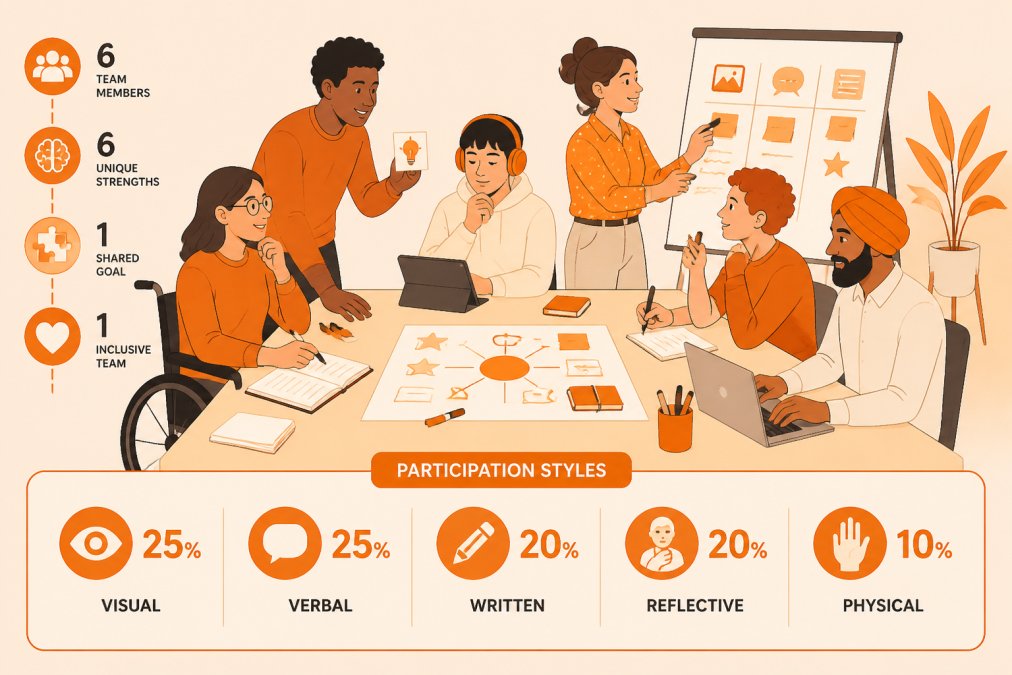
Quiet Spaces and Breakout Options are essential. Neurodivergent employees often experience sensory overload in large-group settings. Provide a quieter space where people can step away without explanation. Offer breakout activities alongside main-group activities so people can choose their participation level.
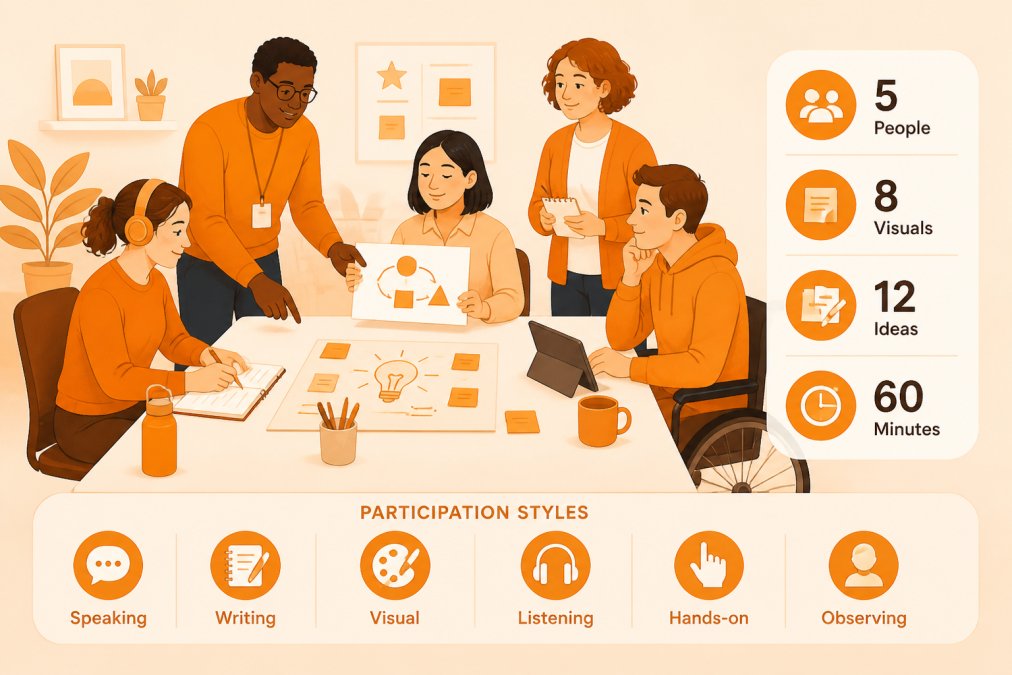
Written Instructions and Visual Agendas help people with processing differences, hearing loss, or language barriers. Provide written instructions for activities, not just verbal. Use visual schedules showing timing and transitions, removing cognitive load and allowing full participation.
Choice in Participation is crucial. Instead of "everyone participates in X," offer options: "You can join the team activity, work on a creative project quietly, or facilitate observation." This acknowledges different energy levels and working styles without shame.
Accessibility Considerations Beyond Mobility matter deeply. Provide captions or transcripts for videos. Offer alternative seating options. Ensure activities don't require sustained eye contact or rapid verbal response. Include people who are deaf, hard of hearing, or who communicate differently from the start.
Team Building Solutions designs inclusive team building ideas that work for neurodivergent employees, people with disabilities, introverts, and anyone who works differently, ensuring everyone feels genuinely included.
Remote teams face a unique challenge: virtual team building often means more screen time, creating fatigue rather than connection. Effective low energy team building requires rethinking the format entirely.
Asynchronous Activities reduce the demand for synchronous video calls. Post a question or prompt in a shared channel. Team members respond in writing over 24 hours. Others read and comment. This creates genuine conversation without requiring everyone online simultaneously and benefits neurodivergent employees and those in different time zones.
Paired Video Calls Instead of Large Groups work better than full-team Zoom meetings. Schedule 15-minute one-on-one calls between team members who don't usually interact with simple prompts like "Share something you're learning." The smaller group size reduces anxiety and creates more authentic connection.
Phone or Voice Calls Without Video can reduce fatigue. Not everyone benefits from constant face-on-screen interaction. Many people find voice-only calls less draining and more connective because they can multitask rather than sitting rigidly in front of a screen.
Shared Document Collaboration builds connection through work. Have team members contribute to a shared document, team wiki, reading list, or collaborative problem-solving on a real work challenge. This creates connection through purpose rather than forced social interaction.
The activity itself is only half the work. What happens after determines whether the connection sticks or fades.
Structured Reflection Questions help teams extract meaning from activities. After any team building exercise, ask: "What did you notice about how we worked together?" or "What surprised you about a colleague today?" Give people time to think before answering.
Individual Reflection Time matters too. Some people process experiences internally. Provide time for quiet reflection, even five minutes of silence, before jumping into discussion. This honours different processing styles and ensures introverted team members have space to integrate the experience.
Connection Documentation helps sustain effects. Have someone capture key moments or insights from the activity and share these with the team afterwards. This reinforces connection and signals that the team building activity mattered.
Regular Check-Ins maintain momentum. Build regular low-stress connection into your rhythm through monthly check-in rounds, quarterly small-group problem-solving, or weekly paired conversations. Consistency builds trust far more than occasional large events.
Building genuine team connection doesn't require exhaustion or performance. The most effective low energy team building activities create psychological safety, honour different working styles, and build collaboration through conversation and shared problem-solving.
Team Building Solutions specialises in designing bespoke corporate events that work for teams of any size, including low-stress, inclusive activities tailored to your specific needs. With over 30 years of experience and a comprehensive account management team, we handle the planning details so you can focus on building genuine team connection. Contact our team for a free consultation or explore our booking options to design low energy team building activities that suit your workforce.
Low energy team building activities reduce anxiety and increase genuine participation, especially for introverts and neurodivergent team members. They foster authentic connection through conversation and collaboration rather than high-stress competition. These activities improve morale, strengthen workplace culture, and build team cohesion without leaving people exhausted. They're also more inclusive, ensuring everyone, regardless of physical ability or energy levels, can contribute meaningfully and feel valued by their team.
Offer activities that don't require standing, running, or physical contact. Provide seating options, quiet spaces, and the ability to participate at your own pace. Use written and verbal communication methods so people with different learning preferences can engage. Avoid activities that assume mobility or sensory abilities. Ask team members in advance about accessibility needs and build flexibility into your plan. Team Building Solutions specialises in designing sessions that naturally accommodate diverse abilities without singling out individuals.
Two-minute check-in rounds where each person shares one word about their mood work well. Collaborative brainstorming on paper, passing a sheet around to add ideas, builds engagement without pressure. Quick word-association games or silent consensus exercises (where teams decide on answers without talking first) are effective. Paired interviews, where colleagues ask each other pre-set questions, strengthen interpersonal connection. These short team building exercises for meetings fit naturally into agendas and energise teams without disrupting workflow.
Structure activities with clear rules and quiet moments, avoid open-ended improvisation or spotlight activities. Offer opt-in participation rather than mandatory contributions. Pair-based or small-group activities work better than large-group games. Provide time to prepare responses, and allow written input alongside verbal sharing. Create low-stakes environments where there's no 'right answer' and no competition. Communicate the activity's purpose in advance so people feel prepared. Team Building Solutions designs sessions that respect different energy levels and communication styles.