


20 August 2026
Last Updated: August 20, 2026
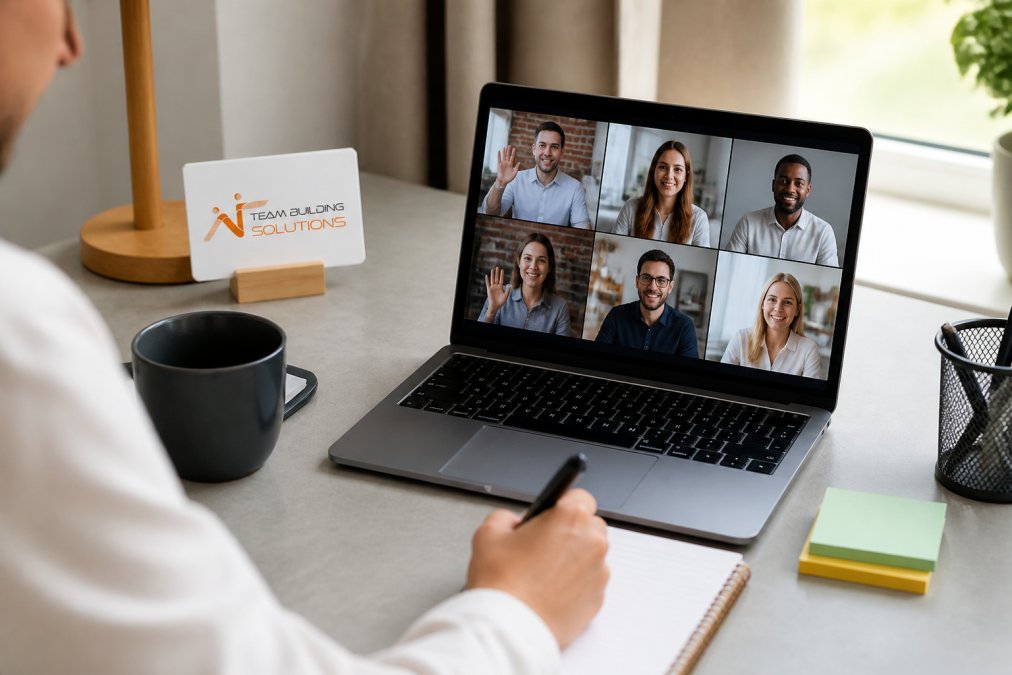
Remote work has fundamentally changed how teams connect. When your workforce spans multiple locations, time zones, or works entirely from home, traditional office interactions that once built relationships simply don't happen. Remote team building virtual solutions create intentional moments of connection that wouldn't occur naturally in a distributed environment.
The challenge isn't finding activities, it's finding ones that feel authentic rather than forced. Generic Zoom calls with awkward icebreakers erode culture rather than build it. What actually works is thoughtful design: activities that respect people's time, accommodate different working styles, and deliver genuine connection rather than performative fun.
Team Building Solutions has spent over 30 years designing experiences that work across these constraints. Whether your team is fully remote, hybrid, or scattered across multiple offices, the principles remain the same: intentionality, inclusivity, and measurable outcomes.
Engagement in a remote workforce requires a fundamentally different approach than traditional office-based team building. The absence of casual hallway conversations means you must create structured opportunities for connection.
Synchronous engagement, real-time interaction, remains the strongest driver of team cohesion. Video conferencing enables face-to-face connection that email and chat cannot replicate. Move beyond status updates into actual conversation through themed discussions, small-group breakouts, or facilitated discussions on non-work topics.
Asynchronous engagement matters equally for distributed teams across time zones. Shared digital spaces where employees contribute ideas, celebrate wins, or share personal updates maintain connection without requiring simultaneous availability.
Combine both approaches: schedule monthly synchronous team events where attendance is expected, complemented by ongoing asynchronous channels like shared Slack threads for wins or rotating "team member spotlight" posts.
The distinction between engagement and engagement theatre matters enormously. Define what success looks like before choosing activities: stronger relationships, improved cross-team communication, higher retention, or faster problem-solving. Then select activities specifically designed to drive those outcomes.
The best virtual team building activities balance engagement with respect for people's time and energy.
Games create a low-stakes environment where people interact naturally. Online trivia works because it plays to existing knowledge and creates natural humour. Breakout rooms allow smaller groups to compete, lowering intimidation.
Virtual escape rooms force collaboration and communication purposefully. Teams solve puzzles within a time limit, creating shared challenge and achievement. Collaborative digital challenges, building something together on a shared whiteboard, accommodate different skill levels and personality types.
Choose games that include rather than exclude people. Trivia requiring specific cultural knowledge alienates participants. The best activities have simple rules, clear objectives, and room for different contribution styles.

Effective icebreakers ask people to share something real about themselves that goes beyond surface level without feeling invasive. Questions like "What's one thing on your bucket list?" invite genuine sharing.
Structured speed-meeting formats work well for larger groups. Pairs rotate every few minutes with new conversation prompts, ensuring everyone speaks to multiple people. Small-group breakout conversations around specific themes, "people who enjoy outdoor activities" or "parents with young children", create natural affinity groups where conversation flows easily.
Activities that allow people to choose their level of participation feel less forced. If someone prefers to listen rather than share, that should be acceptable.
Wellness in a remote context includes mental health, stress management, and the ability to disconnect from work.
Guided meditation or mindfulness sessions reduce stress with minimal setup. Fitness classes, yoga, and stretching create movement and energy. Wellness talks from experts on sleep, stress management, or mental health provide education. Offer sessions at multiple times to accommodate different schedules and time zones.
The most effective wellness programmes combine structured sessions with ongoing resources. A single meditation class helps one person on one day; a library of wellness resources creates sustained benefit.

Team Building Solutions offers award-winning wellness sessions specifically designed for remote and hybrid teams.
Hybrid teams require ensuring remote participants have an equivalent experience to those in a physical space. The mistake many organisations make is designing for in-person attendees first, then adding a virtual component as an afterthought.
Effective hybrid events are designed around the remote experience first. Use breakout rooms to create smaller groups mixing remote and in-person participants rather than one large group with remote people on a screen. Facilitate activities through digital tools both groups access equally. Ensure facilitators engage with remote participants equally.
Accessibility and inclusivity matter equally. Not everyone can participate in high-energy physical activities. Some have mobility limitations; some are neurodivergent and find large groups overwhelming. Offer multiple activities simultaneously, some high-energy and some quiet, some group-based and some individual, with optional attendance. This ensures everyone finds something that works for them.
Timing considerations matter significantly for distributed teams. Rotate event timing or offer multiple sessions so people can participate at reasonable hours.
Leadership asks the inevitable question: what's the actual return on investment? Define what success looks like before the activity. Are you trying to improve retention, increase cross-team collaboration, reduce onboarding time, or improve psychological safety?
Retention is straightforward to track. Compare turnover rates before and after implementing team building initiatives. Cross-team collaboration can be measured through project outcomes: do teams complete projects faster or require fewer coordination meetings?
Employee engagement surveys provide quantitative data on connection, trust, and belonging. Psychological safety, the willingness to take interpersonal risks, is measurable through surveys and observable through team behaviour.
The most compelling ROI argument combines multiple metrics. A team building initiative improving retention by 10%, reducing project timelines by 8%, and increasing engagement scores by 15 points has a clear business case.
Not every team building activity needs to happen in real time. For truly distributed teams across multiple time zones, asynchronous approaches often work better.
Asynchronous team building maintains connection without requiring everyone online simultaneously. Examples include shared digital projects where people contribute over several days, rotating "team member spotlight" posts, themed discussion threads, collaborative playlists or reading lists, and virtual coffee roulette systems pairing people for asynchronous video exchanges.
The advantage is respecting different schedules and time zones. People participate when they have time and energy. The disadvantage is that asynchronous activities create less immediate connection than real-time interaction. Asynchronous approaches work best as a complement to synchronous events, not a replacement.
For teams with significant time zone spread, combine synchronous events scheduled at rotating times with ongoing asynchronous activities that maintain connection between events.
If outsourcing team building, the provider you choose matters significantly.
Experience is the first consideration. A provider with 30+ years of experience has navigated different team dynamics, industries, and challenges. They understand what works and what doesn't.
Scalability matters if your organisation is growing. A provider handling groups from 5 to 500 guests can grow with you. Customisation is critical, your team's challenges are specific. The best providers design bespoke experiences, not cookie-cutter events.
Account management and support make a real difference. Event planning involves dozens of details: logistics, timing, technology, accessibility, contingencies. A dedicated account manager handles these details. A free venue finding service eliminates significant planning burden.
Team Building Solutions combines these elements. Over 30 years of experience means they understand what works. They handle groups from 5 to 500, managing events of any scale. They design bespoke experiences rather than running the same activity for every client. Their comprehensive account management and free venue finding service handle logistical complexity that often derails event planning.
The distinction between a good provider and a mediocre one often comes down to whether they understand your specific challenge. A provider asking questions about your team's dynamics, objectives, and constraints will design something that actually works.
Proving that remote team building virtual solutions work requires moving beyond assumptions to measurement. Define what success looks like for your organisation, implement activities designed to achieve that outcome, and track whether you're moving the needle.
Team Building Solutions can help you design and execute a remote team building virtual programme that delivers measurable outcomes. With their expertise in bespoke event design, comprehensive account management, and proven track record across thousands of events, they understand how to create genuine connection in distributed teams. Get started by contacting Team Building Solutions for a consultation, or book your event to discuss your specific team building needs.
Quick energisers work best when they require minimal setup and maximum participation. Two-minute speed networking where colleagues pair randomly and share one professional win, rapid-fire trivia about company history, or a 10-minute online scavenger hunt using items around home offices all drive engagement without disrupting workflow. The key is keeping instructions simple and ensuring everyone can participate regardless of location or connectivity. Team Building Solutions specialises in designing these micro-activities that fit into busy schedules whilst maintaining genuine connection.
Remote team engagement strategies that prioritise regular connection, recognition, and skill-sharing demonstrate to employees that their organisation values them beyond their output. When distributed teams feel genuinely connected through thoughtful virtual interactions, they experience higher job satisfaction and stronger loyalty. Organisations that invest in structured engagement, whether through wellness sessions, collaborative workshops, or social connection time, report better retention because employees feel part of a real community, not just a video call roster.
Effective virtual wellness sessions for employees combine physical wellbeing with mental health support and team connection. Rather than generic fitness content, bespoke sessions address your team's specific needs: stress management for high-pressure departments, mindfulness for asynchronous teams, or energiser activities for hybrid workforces. Award-winning providers like Team Building Solutions design sessions that feel personal, inclusive, and genuinely restorative, not like another mandatory Zoom obligation. They account for time zones, accessibility needs, and varying fitness levels.
Measure ROI through employee engagement scores pre- and post-event, voluntary participation rates, retention metrics over the following quarter, and internal survey feedback on team cohesion. Track whether collaboration improves across departments, whether employees report feeling more connected to company culture, and whether absenteeism changes. Many organisations also monitor productivity metrics and internal mobility rates, teams with strong culture tend to have higher internal promotion rates. Document qualitative feedback alongside quantitative data to build a compelling business case for ongoing investment.
Yes, when designed strategically. Generic icebreakers won't solve structural issues, but carefully facilitated cross-functional workshops, collaborative problem-solving activities, and structured dialogue sessions can build understanding and break down silos. The key is moving beyond 'fun and games' to create genuine opportunities for different teams to work together on shared goals. Experienced facilitators ensure activities address underlying tensions rather than ignore them. Team Building Solutions has managed complex restructures by designing bespoke programmes that acknowledge real challenges whilst building new team identity.