

23 August 2026
Last Updated: August 23, 2026
Effective team communication is the foundation of organisational success. When teams struggle to communicate clearly, misunderstandings cascade through projects, deadlines slip, and morale suffers. Workshops for improving team communication address these challenges by creating structured environments where employees practise dialogue, resolve conflict, and build interpersonal skills that drive collaboration.
Teams that communicate effectively report higher engagement, faster problem-solving, and stronger retention (peer-reviewed research). Communication workshops are operational necessities, not optional extras. When departments merge, remote and office workers need alignment, or silos block cross-functional collaboration, workshops become the bridge that connects fragmented groups.
Team Building Solutions has spent over 30 years designing bespoke communication workshops that move beyond awkward icebreakers into genuine skill-building. The difference between a generic workshop and an expertly facilitated one comes down to specificity: are activities tied to real workplace challenges, or are they generic exercises disconnected from daily work?
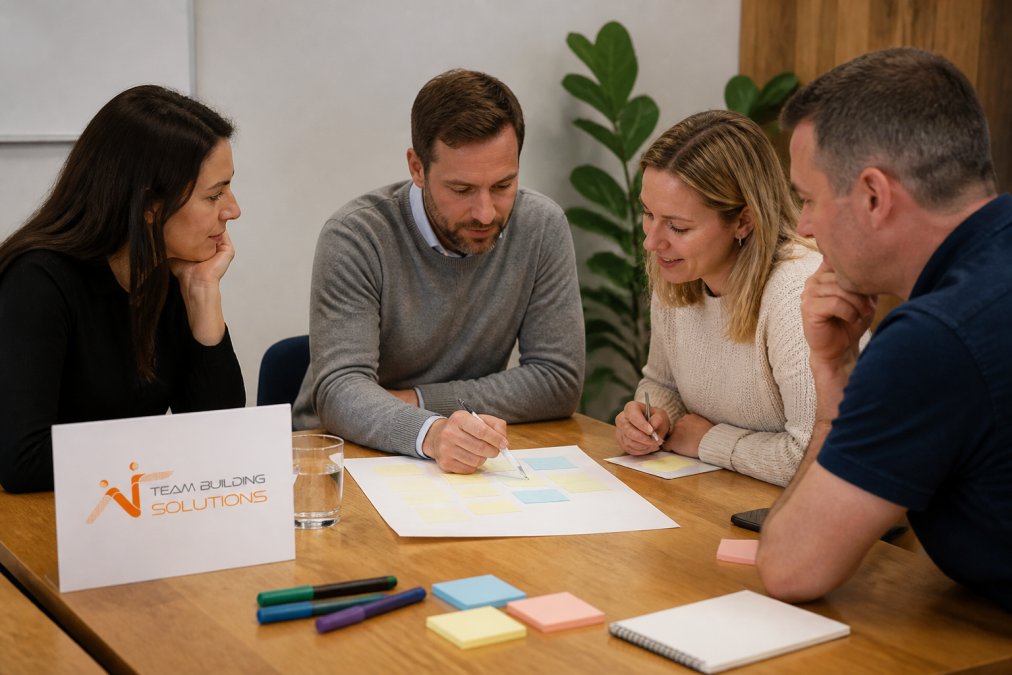
The best communication workshops embed practical exercises into the agenda, activities that teach active listening, conflict resolution, and cross-functional collaboration through direct experience rather than lecture. These are structured simulations and dialogue exercises designed to surface the communication patterns teams actually use, then coach better alternatives.

Active listening is the single most underrated communication skill in most workplaces (apa.org). People hear words but miss intent, interrupt before speakers finish, or formulate responses instead of absorbing what's being said. Active listening exercises train teams to slow down and genuinely understand one another.
The "pair-and-reflect" exercise is highly effective. Two participants discuss a workplace challenge without interruption for five minutes. The listener then reflects back what they heard, the other person's perspective and concerns, not their opinion. This simple structure reveals how often we misunderstand each other's actual meaning. When done across a team, it builds psychological safety and demonstrates that listening is an active skill that improves performance.
Conflict is inevitable in any team. The question isn't whether it will happen, but whether teams have the skills to navigate it constructively. Conflict resolution simulations put teams into realistic scenarios where disagreement is built into the exercise, then coach them through resolution techniques in real time.
A common simulation involves cross-functional disagreement: marketing and operations disagree on a product launch timeline. Sales wants it faster; operations needs more time. Participants learn to identify underlying interests, find creative solutions, and reach agreement without one side simply capitulating. The debrief walks through what worked and how to apply those lessons to actual workplace conflicts.
Many communication breakdowns happen between departments that rarely interact. Cross-functional collaboration tasks break down information silos by forcing teams to work toward a shared goal. A "build-it challenge" where teams from different departments solve a problem under time pressure surfaces how teams actually communicate under stress. These activities work best when they mirror real workplace dynamics.
The structure of a workshop shapes its effectiveness. A well-designed agenda builds momentum, allows time for genuine skill practice, and includes space for integration, helping teams connect workshop learning back to their actual work.
A half-day workshop (typically 3-4 hours) works best for teams with limited availability.
Sample Half-Day Agenda:
Every minute counts in a compressed timeline. Avoid lengthy introductions or theoretical content; jump into activities quickly and debrief thoroughly.
A full-day workshop (6-7 hours with breaks) allows deeper skill-building and more complex scenarios.
Sample Full-Day Agenda:
A full day allows space for different communication styles. Some people need time to process before speaking; others prefer written reflection to verbal discussion. A good facilitator builds in multiple modalities: pair work, individual reflection, written exercises, and movement-based activities.
Remote and hybrid teams face unique communication challenges. Asynchronous communication creates lag, video calls lack nuance, and informal conversations disappear. Virtual workshops must account for these constraints rather than ignore them.
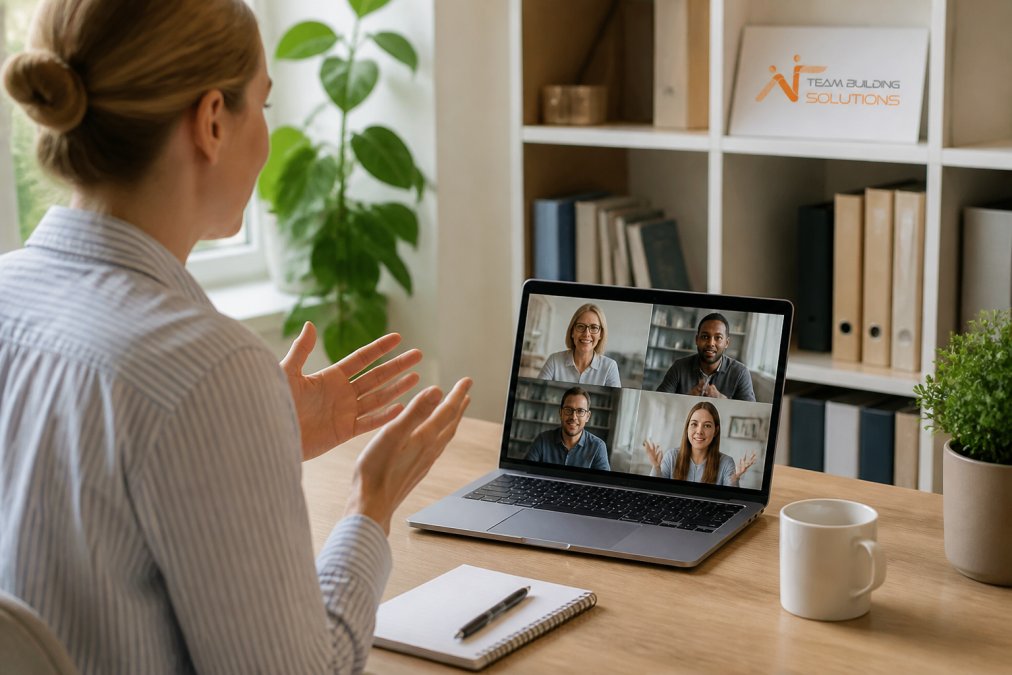
The best virtual workshops use breakout rooms for smaller group work, then bring the full team back for large-group debriefs. Pair exercises work well in breakout rooms. Facilitators should use the chat function intentionally for reflection, creating space for introverts and people who process slowly.
Asynchronous communication deserves explicit attention in virtual workshops. A dedicated session on writing clear emails, when to use recorded video instead of live calls, and how to structure conversations for clarity teaches teams to work better across distributed settings.
Virtual workshops need shorter activity blocks than in-person sessions. Break them into 45-60 minute blocks with clear breaks between to prevent fatigue.
Understanding barriers and planning for them separates effective workshops from ones that generate momentary enthusiasm but no lasting change.
Information Silos: Teams in different departments often don't know what other teams do. Structure activities that force cross-functional dialogue rather than simply seating them together.
Verbal vs. Written Communication Preferences: Include both synchronous and asynchronous elements. Use written reflection exercises alongside verbal discussion to avoid disadvantaging people who communicate better in writing.
Neurodiversity and Communication Styles: Effective workshops offer multiple ways to participate: pair work, individual reflection, small group discussion, and full-group dialogue should all be integrated into the standard agenda.
Psychological Safety: Psychological safety starts through consistent leadership behaviour. Facilitators should establish clear norms: confidentiality, no stupid questions, and disagreement is welcome. When people see leaders participate authentically, safety increases.
Remote Fatigue: Keep virtual workshops shorter than in-person ones. Use the camera intentionally, not requiring video on all the time. Build in movement breaks and use chat and breakout rooms to create variety.
The real measure of a workshop is whether communication actually improves afterward. This requires intentional measurement and post-workshop follow-up.
Before the Workshop: Establish a baseline. How does the team currently communicate? What specific challenges are you trying to solve? This might be a quick survey, facilitated discussion, or one-on-one interviews.
During the Workshop: Observe and document engagement, which activities generate valuable dialogue, and communication patterns that emerge.
After the Workshop: Without follow-up, people revert to old patterns within weeks (peer-reviewed research). A strong post-workshop plan includes:
Team Building Solutions includes post-workshop support in their comprehensive account management, helping teams integrate learning into daily practice rather than delivering a workshop and disappearing.
Improving team communication requires structure, skilled facilitation, and sustained follow-up. Whether your team is newly merged, struggling with remote collaboration, or stuck in outdated communication patterns, a well-designed workshop creates the space for genuine change.
The most common objection is cost and time investment. But the cost of poor communication, missed deadlines, repeated conflicts, lost productivity, and turnover, is far higher. A targeted workshop pays for itself through improved collaboration and reduced friction.
Team Building Solutions specialises in designing and delivering communication workshops tailored to your specific challenges. With over 30 years of experience and a track record of award-winning facilitation, they work with teams of any size. Their comprehensive account management includes venue finding, agenda design, and post-workshop integration support. Whether you need a half-day intensive or a multi-day programme, they deliver workshops that move beyond generic team-building into genuine skill-building.
Ready to improve how your team communicates? Contact Team Building Solutions for a consultation or explore booking options for your workshop. They'll work with you to design an agenda that addresses your specific communication challenges and delivers measurable results.
Team communication workshops strengthen interpersonal skills, build psychological safety, and reduce information silos that slow decision-making. They create a shared language for feedback and conflict resolution, improving team cohesion and workplace culture. Participants learn active listening techniques and non-verbal communication awareness, which translates to more effective meetings and reduced workplace tension. Teams that invest in structured communication training often report faster project delivery and higher employee engagement.
Effective team building activities combine facilitation techniques with real-world scenarios. Active listening exercises teach employees to process information without interrupting. Conflict resolution simulations let teams practise difficult conversations in a safe environment. Cross-functional collaboration tasks break down silos and reveal communication style differences. The key is designing activities that mirror actual workplace challenges, not generic icebreakers. Team Building Solutions creates bespoke activities tailored to your team's specific communication gaps and organisational culture.
A strong communication workshop agenda templates structure time for icebreakers, facilitation of key soft skills training, interactive exercises, and reflection. A half-day workshop typically spans 4 hours; a full-day session allows 6-7 hours for deeper work. Essential elements include active listening practice, feedback loops, and group facilitation of real scenarios your team faces. Agendas should also build in breaks and vary between synchronous discussion and individual reflection. Post-workshop implementation plans ensure behaviours change after the event ends.
Virtual team communication workshops can be highly effective when designed for asynchronous and synchronous engagement. The key is avoiding passive Zoom fatigue by incorporating breakout rooms, interactive polls, and collaborative tools. Remote collaboration requires clearer communication and written communication skills, areas virtual workshops can address directly. Hybrid formats that combine live sessions with asynchronous tasks often work best for distributed teams. Team Building Solutions designs virtual workshops that keep remote participants engaged and create genuine connection despite physical distance.
Measure communication ROI through employee engagement surveys before and after, tracking metrics like meeting effectiveness, conflict resolution speed, and project collaboration quality. Monitor retention rates, as stronger team dynamics reduce turnover. Collect feedback on whether difficult conversations feel more constructive and whether information silos have narrowed. Some organisations track absenteeism and sick leave, which often improve when team cohesion strengthens. Document specific examples of conflicts resolved faster or cross-functional projects that moved smoother post-workshop. These outcomes demonstrate tangible business value beyond participant satisfaction scores.